About
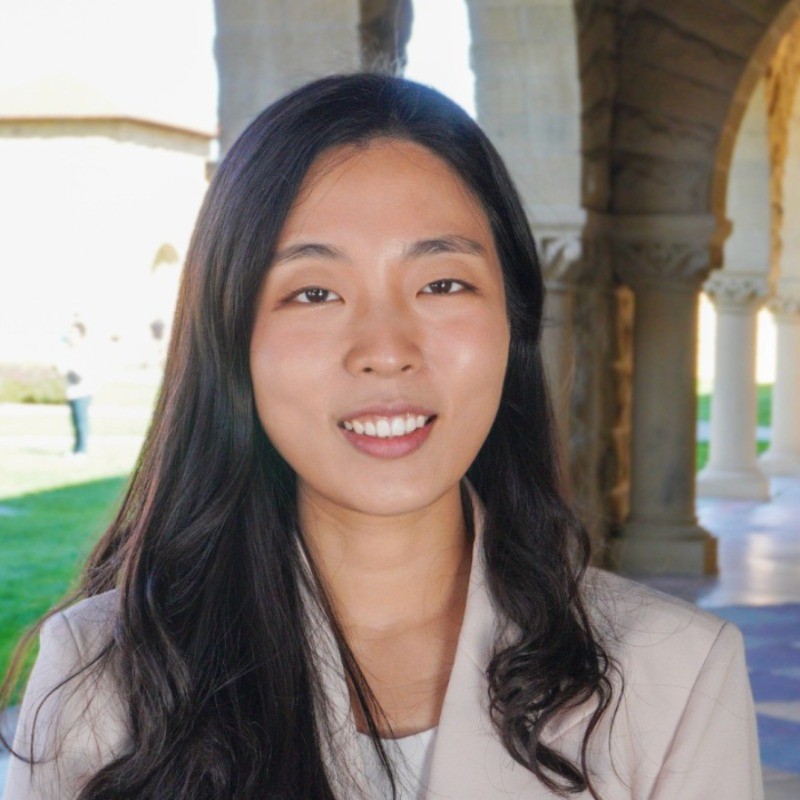
I'm a Senior Applied Scientist on an incubation team at Microsoft and a social psychologist studying AI and human behavior. I believe that making technology powerful and making it responsive to the complexities of our human-ness are goals that should go together.
I completed my Ph.D. in Psychology at Stanford University, mentored by Jennifer Eberhardt, Hazel Markus, and Dan Jurafsky, and was a postdoctoral fellow at Stanford SPARQ, a behavioral science "do-tank." Through SPARQ, I partnered with Nextdoor on research that helped reduce platform incivility. Previously, I earned my B.A. in Psychology with Honors from Rice University.
My research has been supported by the Russell Sage Foundation and featured in media such as The New York Times, the Associated Press, The Oprah Podcast, The Economist, NPR, TIME, and The Guardian.
Let's Chat
I'm in the Bay Area — drop me a note if you're in town or reach me at cinoolee [at] microsoft [dot] com.
Research
* co-first authorshipScience, 2026. Cover story. See also: Perspective
Featured in The Oprah Podcast, Associated Press, The New York Times, ABC News, TIME, The Guardian, Scientific American, Ars Technica
preprint, 2026.
ICLR 2026.
Featured in NPR, MIT Technology Review, Venture Beat, Business Insider
Journal of Management Scientific Reports, 2026.
NAACL, 2025.
Tutorial at IC2S2 2025: Bridging Human and LLM Annotations for Statistically Valid Computational Social Science
Proceedings of the National Academy of Sciences, 2024.
Plenary talk at IC2S2 2025 (selected from 1000+ submissions)
Scientific Reports, 2024.
International Conference on Machine Learning (ICML), 2023.
Teaching & Talks
Invited Talks
Instructor
Teaching Assistant
🌱 Good for my soul
- Milk tea (any day is a good day for milk tea)
- Epik High, AKMU
- Wildflowers
- 🎧 now playing: 기쁨, 슬픔, 아름다운 마음 (Joy, Sorrow, A Beautiful Heart)